Chelsea_Sun ・ Sep. 20, 2026
NextFin News — China’s largest internet companies have turned office work into their most intense artificial-intelligence contest.
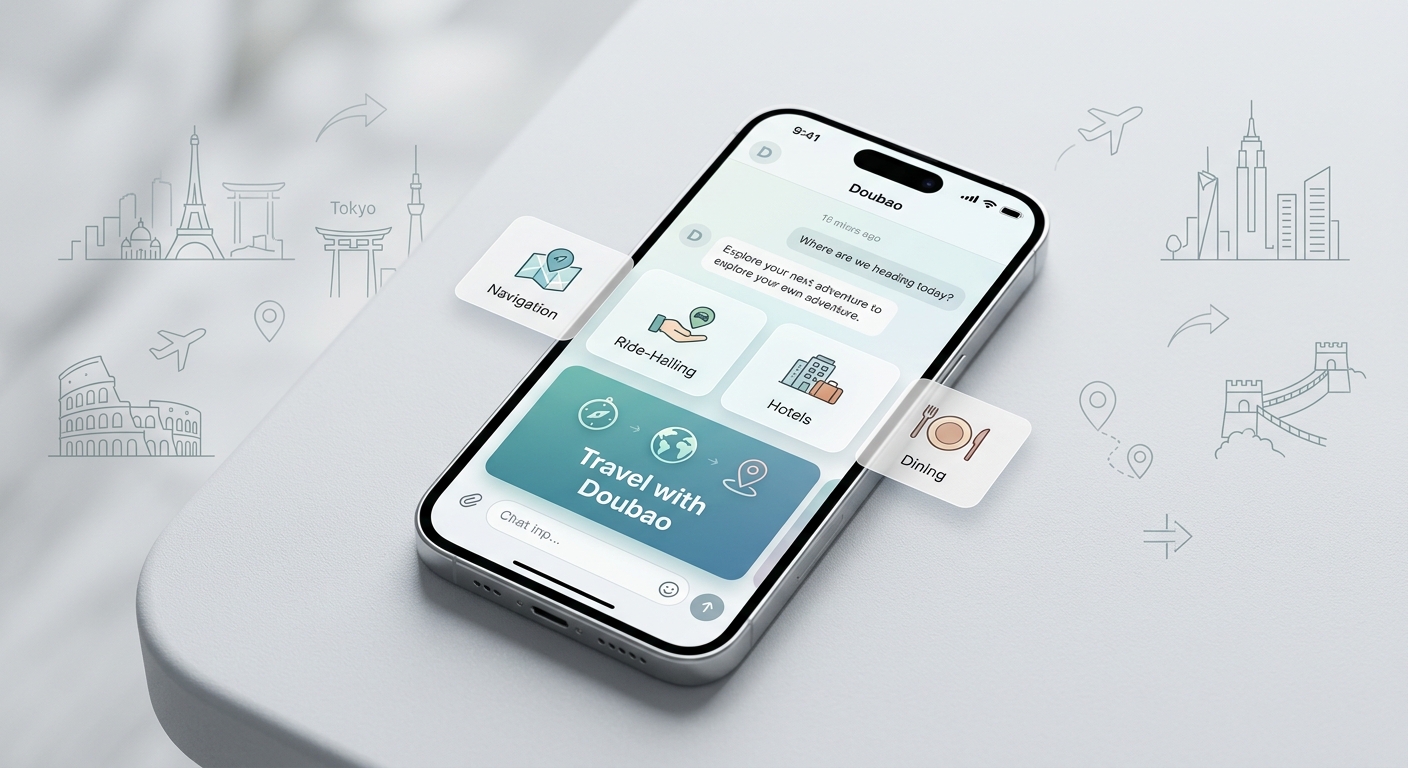
In mid-September ByteDance chief executive Liang Rubo appeared at a Feishu event to announce the formal integration of Doubao, Feishu and Volcano Engine capabilities under a new “Doubao Work” banner. Tencent’s WorkBuddy opened its platform to more than a hundred partners, staged cross-brand campaigns and launched creation contests within days. Alibaba reported that Qwen Office had already shipped 120 version updates in its first month and signed up more than 30 million registered users, half of them corporate.
The flurry follows a summer of internal consolidation. Tencent folded QClaw into WorkBuddy. ByteDance moved Feishu’s product team under Doubao and later absorbed TRAE and Coze. Alibaba merged several experimental tools into a single Qwen Office product managed by the DingTalk chief. The message is uniform: the age of scattered experiments is over; each company now bets on one primary agent that lives inside existing workplace software.
QuestMobile data for July show the category expanding quickly. Overall monthly active users in the AI efficiency-office segment reached 102 million. Native office apps and PC clients posted triple-digit year-on-year growth. WorkBuddy led the pure agent rankings, followed by other Tencent, ByteDance and Alibaba offerings. Second-tier players such as Baidu’s Dazi and Kingsoft’s Lingxi trail in visibility and connector breadth.
The technical architecture is similar across contenders. Users issue natural-language tasks; the agent plans steps, calls connectors to existing tools, and returns finished documents, spreadsheets or scheduled actions. The decisive advantage lies less in raw model power than in native access to organizational context. Tencent routes capability through WeChat and WeCom relationship graphs. Alibaba draws on DingTalk’s messages, approvals, calendars and knowledge bases. ByteDance inherits Feishu’s documents, meetings and permission structures. Agents that can read living collaboration streams possess richer context than those limited to static document retrieval.
Monetization remains early. Most products combine free credit quotas with tiered subscriptions. Tencent has told investors that paid WorkBuddy users already generate gross margins comparable to its cloud business, even while free users are subsidized to build share. The broader market forecasts are ambitious—iiMedia projects domestic AI-agent revenue rising from roughly 80 billion yuan in 2025 toward 156 billion yuan in 2026—but actual willingness to pay for agentic office work is still being tested.
Overseas the picture differs. Microsoft Copilot benefits from deep Office integration. Google continues to push Workspace features. OpenAI and Anthropic treat work modes as extensions of their general assistants rather than standalone office products; Anthropic recently merged its cowork and chat interfaces so the model itself decides which tools to invoke. The most advanced systems are beginning to operate directly on screen pixels, reducing dependence on software vendors’ application programming interfaces.
That trajectory raises a longer-term question. If general models eventually handle multi-step professional work with high reliability, the specialized office-agent layer may shrink in importance. For now, however, Chinese platforms are treating the category as existential. Consumer chatbot acquisition costs have already proven expensive; enterprise workflows that sit on top of existing seats, permissions and documents offer a clearer path to recurring revenue and higher switching costs.
Independent tests still reveal gaps. Agents can draft slides or clean tables, yet longer chains that require accurate image selection, consistent data mapping or dynamic adjustment frequently break. Reliability over dozens of model calls remains the practical bottleneck. Until that improves, the products function more as powerful assistants than autonomous colleagues.
The competitive logic is nevertheless clear. The companies that already own the daily collaboration graph—messages, documents, approvals, calendars—possess the context that pure model providers lack. They are racing to turn that context into default agents before the underlying models become so capable that the intermediate layer matters less. Whether the current surge produces durable franchises or merely another costly feature race will depend on how quickly the agents move from impressive demos to dependable daily infrastructure.
 LIKE 0